Created by child psychologists who specialize in selective mutism and child anxiety, this practical teacher booklet is designed to help educators understand selective mutism and feel confident supporting affected students in the classroom. It explains what SM is (and is not), why children become “stuck” and unable to speak at school, and how classroom responses can either reinforce silence or gently unlock brave talking over time.
The booklet walks teachers through the early signs of SM, how the anxiety cycle is maintained, and evidence-based strategies for creating a supportive classroom environment. It introduces clear, teacher-friendly tools such as the P.R.I.D.E. skills, “golden rules” for SM, and practical guidance on asking questions in ways that increase the likelihood of verbal responses rather than shut children down.
Designed as a concise “cheat sheet,” it is ideal for busy educators, SENCOs, school counsellors, and support staff who need concrete, step-by-step strategies they can start using immediately. The focus is on reducing anxiety, gradually shaping communication, and collaborating with families and external professionals so that the child can become their most comfortable, communicative self at school.
Created by child psychologists who specialize in selective mutism and child anxiety, this practical teacher booklet is designed to help educators understand selective mutism and feel confident supporting affected students in the classroom. It explains what SM is (and is not), why children become “stuck” and unable to speak at school, and how classroom responses can either reinforce silence or gently unlock brave talking over time.
The booklet walks teachers through the early signs of SM, how the anxiety cycle is maintained, and evidence-based strategies for creating a supportive classroom environment. It introduces clear, teacher-friendly tools such as the P.R.I.D.E. skills, “golden rules” for SM, and practical guidance on asking questions in ways that increase the likelihood of verbal responses rather than shut children down.
Designed as a concise “cheat sheet,” it is ideal for busy educators, SENCOs, school counsellors, and support staff who need concrete, step-by-step strategies they can start using immediately. The focus is on reducing anxiety, gradually shaping communication, and collaborating with families and external professionals so that the child can become their most comfortable, communicative self at school.


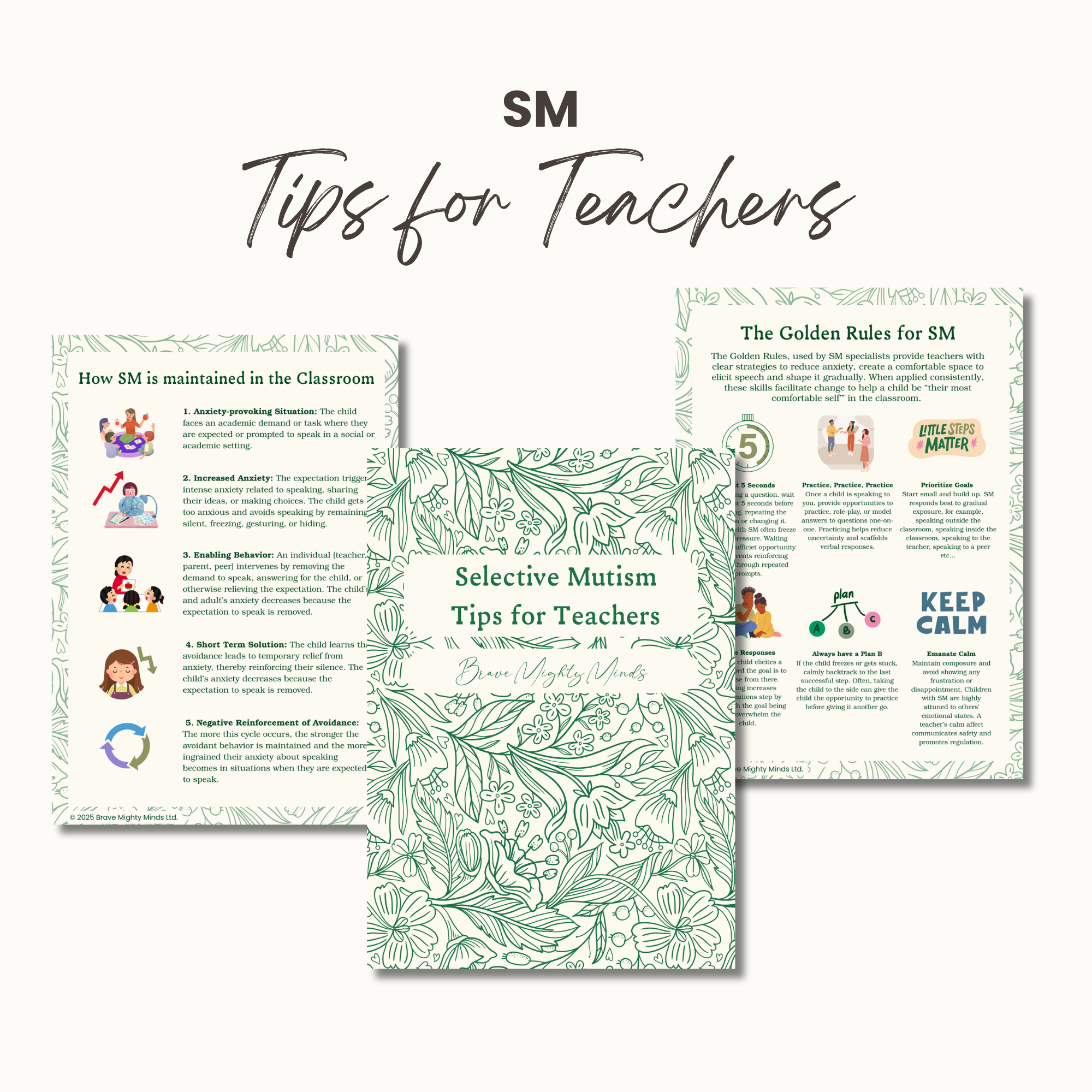 Image 1 of 1